Pediatric Skills Lab (M35)

Skills Lab

Date & Time:

February 16, 2026

2:00 PM – 3:30 PM PT

Format:

In Person

CE Credits:

1.5 Hours

UAN: JA0002345-0000-26-038-L99-P

Course level:

Basic/Intermediate

Pediatric Content Included

session objectives:

What You'll Learn

Explore a variety of topics related to Pediatric Nutrition Support in this deep dive session. This session will address knowledge gaps through interactive discussions, hands-on demonstrations, and case study presentations. This skills lab will have multiple stations covering a variety of topics and will feature the latest practices, research, and guidelines to enhance clinical practice skills. Participants may move among the individual stations as they choose.

  • Discuss new formula products available for the nutrition management of children with complex conditions.
  • Examine the risk factors for, indications of, and strategies used to treat neonates with refeeding syndrome.
  • Identify central venous access devices (CVADs) commonly used with parenteral nutrition (PN) in children and the treatment of recurrent line infections.
  • Identify the components of a nutrition-focused physical exam (NFPE).
  • Outline the interpretation of micronutrient monitoring during PN with an emphasis on dosing for treatment and prevention of deficiencies.
  • Discuss methods of diagnosing and monitoring bone health in children with complex medical conditions receiving nutrition support.
  • Identify alternate methods of assessing anthropometrics and body composition in children.
  • Discuss novel nutrition treatment strategies for children with gastrointestinal malabsorption.

Topics & Presenters

Fueling the Future: New Formulas and Fresh Trends in Complex Pediatric Nutrition

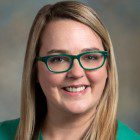
Elizabeth Bobo
MS, RD, LDN, CNSC, FAND, FASPEN

Pediatric Clinical Dietitian, Manager

Nemours Children’s Health

Jacksonville, FL

Neonatal Refeeding Syndrome: Risk Factors, Indications, and Treatment Strategies

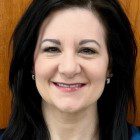
Jacqueline Wessel
MEd, RDN, CNSC, CSP, CLE

Neonatal Nutritionist

Neonatal Intensive Care Unit, Cincinnati Children’s Hospital Medical Center

Cincinnati, OH

Central Venous Access Devices and Troubleshooting Recurrent Line Infections

Hanna Chong
MSN, RN, CPNP-PC, CVC NP

CVC Consultant

Hematology Oncology, Children’s Hospital Los Angeles

Los Angeles, CA

Nutrition Focused Physical Examination
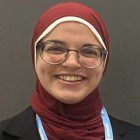
Sirine Belaid
MBBS, MPH, MS

Assistant Professor

The University of Alabama at Birmingham

Pediatric Gastroenterologist Attending

Division of Pediatric Gastroenterology, Hepatology and Nutrition, Department of Pediatrics, The University of Alabama at Birmingham

Birmingham, AL

Nutrition Focused Physical Examination

Meera Al-Rajabi

Medical Student, BA/MD Program

School of Medicine, University of Missouri

Columbia, MO

The Interpretation of Micronutrient Levels: Monitoring, Dosing, and Prevention of Deficiency During Parenteral Nutrition

Margaret Murphy
PharmD, BCNSP

Senior Clinical Pharmacist

Home Parenteral Nutrition Program, Boston Children's Hospital

Boston, MA

Diagnosis and Monitoring of Bone Health In Children

Kelsey Palm
RDN, CNSC, CCTD

Pediatric Registered Dietitian Nutritionist

Patient Food and Nutrition Services, University of Michigan Health, Michigan Medicine

Ann Arbor, MI

Alternate Methods of Assessing Anthropometrics and Body Composition In Children

Gina Rempel
MD, FRCPC, FASPEN

Medical Lead, Pediatric Provincial Enteral Nutrition Support

Pediatric Rehabilitation and Complex Care , Children's Hospital Winnipeg/University of Manitoba

Winnipeg, MB, Canada

Novel Nutrition Treatment Strategies for Children With Fat Malabsorption

Andrea Adler
RD, CSPCC, LD

Advanced Practice Pediatric Dietitian

Pediatric Nutrition Support, Cleveland Clinic Children's Hospital

Cleveland, OH

Moderators:

Austin Michalski

RDN

Registered Dietitian Nutritionist

Patient Food and Nutrition Services, CS Mott Children’s Hospital, University of Michigan Health

Ann Arbor, MI

Enteral Access Skills Lab (SU35)

Skills Lab

Date & Time:

February 15, 2026

2:00 PM – 3:30 PM PT

Format:

In Person

CE Credits:

1.5 Hours

UAN: JA0002345-0000-26-021-L99-P

Course level:

Basic/Intermediate

session objectives:

What You'll Learn

Explore a variety of topics related to Enteral Nutrition Access in this deep dive session. This session will address knowledge gaps through interactive discussions, hands-on demonstrations, and case study presentations. This skills lab will have multiple stations covering a variety of topics and will feature the latest practices, research, and guidelines to enhance clinical practice skills. Participants may move among the individual stations as they choose.

  • Distinguish between the different types of enteral feeding devices for use in the inpatient and outpatient settings.
  • Troubleshoot common complications associated with enteral feeding devices.
  • Explain two technology-assisted methods for small bowel feeding tube placement.
  • Create a plan to form a tube placement team.

Topics & Presenters

Gastrostomy Tube Placement Technique: The Surgeons Perspective

Michael Nabozny
MD

Assistant Professor of Surgery

Critical Care Medicine, University of Rochester Medical Center

Rochester, NY

Nasally Placed Feeding Tube Device: Electromagnetic-Guided

Lauren Bruwer
MSN, APRN, AGCNS-BC, PCCN

Clinical Nurse Specialist

Digestive Disease Institute, Cleveland Clinic

Cleveland, OH

Nasally Placed Feeding Tube Device: Electromagnetic-Guided

Mary Kronik
RD, LD, CNSC

Advanced Practice I Dietitian

ICU, Cleveland Clinic

Cleveland, OH

Nasally Placed Feeding Tube Device: Video-Assisted

Crystal Bradley
RD-AP, CNSC

Nutrition Support Specialist

Food and Nutrition, Barnes-Jewish Hospital

St. Louis, MO

Forming a Tube Placement Team

Taylor Horrigan
MS, RD, LD

Registered Dietitian

Gastroenterology/Nutrition, Cleveland Clinic

Cleveland, OH

Forming a Tube Placement Team

Rebecca Bartram
RD, LD

Registered Dietitian

Gastroenterology/Nutrition, Cleveland Clinic

Cleveland Clinic, OH

How to Deliver Medications to Prevent Tube Clogging, and What To Do If It Clogs Anyway!

Gerald Schmidt
PharmD, BCNSP

Clinical Professor

UF Health

Pharmacy Nutrition Specialist

UF Health

Jacksonville, FL

How to Deliver Medications to Prevent Tube Clogging, and What To Do If It Clogs Anyway!

Linda Lord
NP, ACNP-BC, CNSC, FASPEN

Nurse Practitioner

Trauma Surgery, University of Rochester Medical Center

Rochester, NY

G-tube SOS: How to Tackle G-tube Troubles with Confidence!

Carol Cheney
BSN, RN, CPN, OMS

Staff Nurse 2

Surgery, Boston Children's Hospital

Boston, MA

G-tube SOS: How to Tackle G-tube Troubles with Confidence!

Alexis Hurley
BSN, RN, CPN

RN/Case Manager

Surgery, Boston Children's Hospital

Boston, MA

Totally Tubular: Choosing the Right Enteral Access Device for Your Patient

Emily Lahtinen
RN, BSN

Triage Registered Nurse

Gastroenterology and Hepatology, Mayo Clinic

Glendale, AZ

Totally Tubular: Choosing the Right Enteral Access Device for Your Patient

Elizabeth Gray
RN, BSN

Registered Nurse

Gastroenterology and Hepatology, Mayo Clinic

Scottsdale, AZ

Enteral Access Device Exchanges and Troubleshooting Issues in the Home Setting

Melissa Klouzal
RD, CD, CNSC

Registered Dietitian

Clinical Nutrition Services, Providence Infusion & Pharmacy Services

Bothell, WA

Enteral Access Device Exchanges and Troubleshooting Issues in the Home Setting

Virginia Weber
RD, CD

Registered Dietitian

Clinical Nutrition Services, Providence Infusion & Pharmacy Services

Seattle, WA

Moderators:

Linda Lord

NP, ACNP-BC, CNSC, FASPEN

Nurse Practitioner

Trauma Surgery, University of Rochester Medical Center

Rochester, NY

Nutrition Assessment Skills Lab (M25)

Skills Lab

Date & Time:

February 16, 2026

10:15 AM – 11:45 AM PT

Format:

In Person

CE Credits:

1.5 Hours

UAN: JA0002345-0000-26-032-L99-P

Course level:

Basic

session objectives:

What You'll Learn

Explore a variety of topics related to Nutrition Assessment in this deep dive session. This session will address knowledge gaps through interactive discussions, hands-on demonstrations, and case study presentations. This skills lab will have multiple stations covering a variety of topics and will feature the latest practices, research, and guidelines to enhance clinical practice skills. Participants may move among the individual stations as they choose.

  • Implement the use of the appropriate nutrition assessment tools in a variety of settings.
  • Outline the advantages and limitations of each nutrition assessment tool.
  • Experiment with each nutrition assessment tool through demonstration and hands-on experience.

Topics & Presenters

CT Imaging

Amanda Bode
MC, RD, CSO, LD

Registered Dietitian

CCF

Mansfield, OH

Ultrasound

Christan Bury
MS, RD, LD, CNSC

Advanced Practice II Dietitian

Digestive Disease and Surgery Institute, Cleveland Clinic

Cleveland, OH

Bioelectric Impedance Analysis

Addison Coffey
MS, RDN, LDN

Clinical Dietitian

Nutrition and Food Service, James A. Haley Veterans Hospital

Tampa, FL

Indirect Calorimetry

Stacy Pelekhaty
MS, RDN, LDN, CNSC, FAND, FASPEN

Senior Clinical Nutrition Specialist

University of Maryland Medical Center

Baltimore, MD

Calf Circumference

M. Cristina Gonzalez
PhD, MD

Professor

Postgraduate Program in Nutrition and Food, Federal University of Pelotas

RS, Pelotas, Brazil

Handgrip Strength

Terese Scollard
MBA, RD, FAND, FASPEN

Owner, Consultant, Educator

MySurgeryPlate LLC

Beaverton, OR

Moderators:

Hailey Wilson

MS, RD, CSO, CNSC

Registered Dietitian

Medical Nutrition Therapy, Fred Hutchinson Cancer Center

Seattle, WA

Basic Skills in Parenteral Nutrition Management – Part B (SU25)

Skills Lab

Date & Time:

February 15, 2026

10:30 AM – 12:00 PM PT

Format:

In Person

CE Credits:

1.5 Hours

UAN: JA0002345-0000-26-015-L99-P

Course level:

Basic

session objectives:

What You'll Learn

Explore a variety of topics related to Parenteral Nutrition Management in this deep dive session. This session will address knowledge gaps through interactive discussions, hands-on demonstrations, and case study presentations. This skills lab will have multiple stations covering a variety of topics and will feature the latest practices, research, and guidelines to enhance clinical practice skills. Participants may move among the individual stations as they choose. Please note: This skills lab has two sessions, and the topics presented will be different in each session.

  • Analyze differences in nutrient dosing and utilization based on clinical condition.
  • Identify assessment and treatment strategies to manage electrolytes in parenteral nutrition patients.
  • Effectively manage IV access and parenteral nutrition compounding complications.
  • Create a safe parenteral nutrition formulation per compound and stability limits.

Topics & Presenters

Walking the Tightrope: Balancing Calcium and Phosphorus in the Patient Receiving PN

M. Petrea Cober
PharmD, MEd, BCNSP, BCPPS, FASPEN

Professor of Pharmacy Practice; Director of Workforce Development

Office of Student Success, Northeast Ohio Medical University, College of Pharmacy

Director of Professional Development

Office of Education, Northeast Ohio Medical University, College of Pharmacy

Rootstown, OH

Provision of Micronutrients to the Patient on Parenteral Nutrition

Jacob Hall
PharmD

Clinical Pharmacy Specialist in Critical Care and Nutrition Support

The University of Texas MD Anderson Cancer Center

Houston, TX

Patient Assessment: A Focus on Patient Specific Considerations and Parenteral Nutrition Components

Roaxana Poskey
MS, RDN, LD, CNSC, FAND

Advanced Practice Dietitian-Nutrition Support

Michael E. DeBakey VA Medical Center

Houston, TX

Fluid Assessment and Sodium Homeostasis in Patients Receiving PN

Rina Patel
PharmD, BCNSP, FASPEN

Clinical Pharmacy Specialist in Critical Care and Nutrition Support

The University of Texas MD Anderson Cancer Center

Houston, TX

Assessing the Access: Review of the Management of IV Access in the Parenteral Nutrition Patient

Kathleen Tushar
RN, BSN

Nutrition Support Registered Nurse

Center for Human Nutrition, Cleveland Clinic

Cleveland, OH

Key Calculations in Parenteral Nutrition Order Writing

Sara Bliss
PharmD

Clinical Pharmacist

Department of Pharmacy, University of North Carolina Hospitals

Chapel Hill, NC

Moderators:

Karrie Derenski

PharmD, BCNSP, BCCCP, CNSC, FASPEN

Nutrition Support Consultant

Independant Consultant

Kansas City, MO

Basic Skills in Parenteral Nutrition Management – Part A (SA25)

Skills Lab

Date & Time:

February 14, 2026

2:30 PM – 4:00 PM PT

Format:

In Person

CE Credits:

1.5 Hours

UAN: JA0002345-0000-26-008-L99-P

Course level:

Basic

session objectives:

What You'll Learn

Explore a variety of topics related to Parenteral Nutrition Management in this deep dive session. This session will address knowledge gaps through interactive discussions, hands-on demonstrations, and case study presentations. This skills lab will have multiple stations covering a variety of topics and will feature the latest practices, research, and guidelines to enhance clinical practice skills. Participants may move among the individual stations as they choose. Please note: This skills lab has two sessions, and the topics presented will be different in each session.

  • Explain basic acid-base disorders and how they apply to the patient receiving parenteral nutrition.
  • Identify assessment and treatment strategies to manage electrolytes and glycemic control in parenteral nutrition patients.
  • Manage IV access and parenteral nutrition compounding complications.

Topics & Presenters

To Add or Not to Add: Treatment of Potassium and Magnesium Imbalances in the Patient Receiving Parenteral Nutrition

Karrie Derenski
PharmD, BCNSP, BCCCP, CNSC, FASPEN

Nutrition Support Consultant

Independant Consultant

Kansas City, MO

Glycemic Management of the Patient Receiving Parenteral Nutrition

Anne Tucker
PharmD, BCNSP, FASPEN

Clinical Pharmacy Specialist in Critical Care and Nutrition Support

Division of Pharmacy, The University of Texas MD Anderson Cancer Center

Houston, TX

To Add or Not to Add: Treatment of Potassium and Magnesium Imbalances in the Patient Receiving Parenteral Nutrition

Jessica Monczka
RD, CNSC, FASPEN

Nutrition Quality Assurance Manager

Option Care Health

Bannockburn, IL

The Ins and Outs of Parenteral Nutrition Access Devices

Kathleen Tushar
RN, BSN

Nutrition Support Registered Nurse

Center for Human Nutrition, Cleveland Clinic

Cleveland, OH

It’s All About the Acid-Base, No Trouble: Identification and Treatment of Acid-Base Disorders

Angela Bingham
PharmD

Chair

Department of Pharmacy Practice, Philadelphia College of Pharmacy at Saint Joseph's University

PharmD Program Director

Department of Pharmacy Practice, Philadelphia College of Pharmacy at Saint Joseph's University

Clinical Professor

Department of Pharmacy Practice, Philadelphia College of Pharmacy at Saint Joseph's University

Philadelphia, PA

Mixing It Up: Parenteral Nutrition Formulations, Compatibility, and Compounding

Sarah Cogle
PharmD, BCCCP, BCNSP, FCCM, FASPEN

Clinical Pharmacist Specialist and Team Lead

Burn Critical Care/Nutrition Support, Vanderbilt University Medical Center

Nashville, TN

Moderators:

Rina Patel

PharmD, BCNSP, FASPEN

Clinical Pharmacy Specialist in Critical Care and Nutrition Support

The University of Texas MD Anderson Cancer Center

Houston, TX