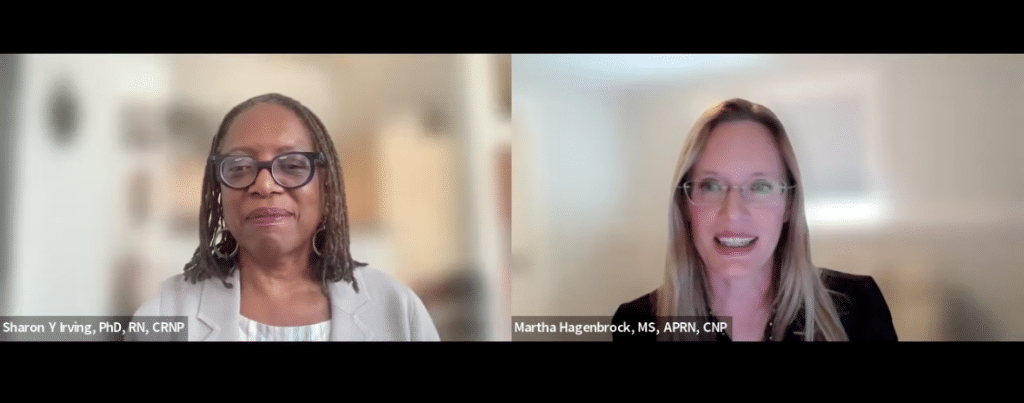

Nutrition care is part of nursing care, whether a nurse works at the bedside, in a clinic, or in the community. In an interview with Martha Hagenbrock, a nurse practitioner and chair-elect of ASPEN’s Nutrition Support Nurses section, ASPEN President Sharon Y. Irving, PhD, RN, CRNP, FCCM, FNAP, FAAN, FASPEN, explains why nutrition knowledge matters across nursing practice.
Dr. Irving, ASPEN’s first nurse president, sees nutrition as part of caring for the whole patient. She draws on her experience as a bedside nurse, nurse practitioner, researcher, educator, and academic leader to describe the contributions nurses make to nutrition care.
Recognizing Patients at Risk for Malnutrition
Nurses in hospitals, clinics, long-term care, and home care are often the first point of healthcare contact and are able to help identify patients who may be at risk for malnutrition. Dr. Irving encourages nurses to pay attention to what they observe, ask patients what they typically eat, and consider whether access to food may be a concern.
A nurse does not need to diagnose malnutrition to act on a concerning observation. Nutrition screening or an observation can prompt a conversation with a dietitian, provider, or another colleague who can help determine the next steps.
Monitoring Enteral and Parenteral Nutrition
Dr. Irving emphasizes that nurses’ role in nutrition support goes beyond delivering therapy. For patients receiving enteral nutrition, a nurse may recognize signs that a feeding is not being tolerated. For patients receiving parenteral nutrition, a nurse may notice a change in the patient’s condition or a concern at the central line site and alert the care team. Patient safety is a key pillar to nutrition nursing practice.
Nurses also bring a practical perspective to nutrition care. Dr. Irving considers how guidelines and care plans affect nursing workflow, as well as what patients and families will need when care continues outside the hospital.
Learning Through Collaboration
For nurses who want to build their nutrition knowledge, Dr. Irving recommends learning from colleagues across disciplines, especially dietitians, and choosing nutrition topics for continuing education. With the increasing availability of formal and informal educational opportunities, nurses can become well versed in nutrition basics and nutrition care delivery. As she explains in the interview, no single discipline can provide this care alone.
Nurses can find ASPEN clinical guidelines, standards, and practice resources, connect with peers through the Nutrition Support Nurses Practice section, and learn about Certified Nutrition Support Clinician® (CNSC®) certification.
Watch the full video interview with Dr. Irving and Martha Hagenbrock